The Professional of Intersectional Relationalities (PIRS) Framework serves as a guide for IIRS. Most continuing education programs in sexuality education, therapy, and counseling are organized around a logic of competency. They identify a set of skills or knowledge areas that a practitioner is expected to master, deliver that content in a standardized format, and issue a credential upon completion. This model assumes that the relevant knowledge has already been identified and that the task of education is merely to transmit it. It assumes that the practitioner’s role is to apply established frameworks to new cases. It also assumes that professional knowledge is politically neutral, treating clinical categories, diagnostic frameworks, and therapeutic models as accurate descriptions of reality rather than historically specific, culturally contingent, and politically loaded constructions.
The PIRS Framework challenges all three of these assumptions.
The framework is organized around four foundational praxis: Biopsychoneural Narratives, Femme Architectonics, X-Handbook, and Biopolitical Cartography. Each praxis constitutes a distinct but deeply interconnected domain of inquiry. Together, they form a comprehensive map of the terrain that this comprehensive training covers across disciplines of Neuroscience, Genetics, Pharmacology, Endocrinology, Developmental Biology, Tissue Engineering, Biotechnology, Psychology, Gender and Sexuality Studies, Anthropology, History, Art Psychology, Dance Ethnography, Ethnomusicology and Political Science.
The program is highly customizable, reflecting a core pedagogical commitment to individualized learning. This customizability functions as a political statement. The conventional professional certification program operates as a site of “curriculum as control,” as Abraham DeLeon describes in his analysis of anarchism and education. It serves as a mechanism through which the institution determines what is worth knowing and in what order it should be known. The PIRS Framework inverts this logic by trusting the learner to know what they need.
PRAXIS OR DOMEAINS OF INQUIRY
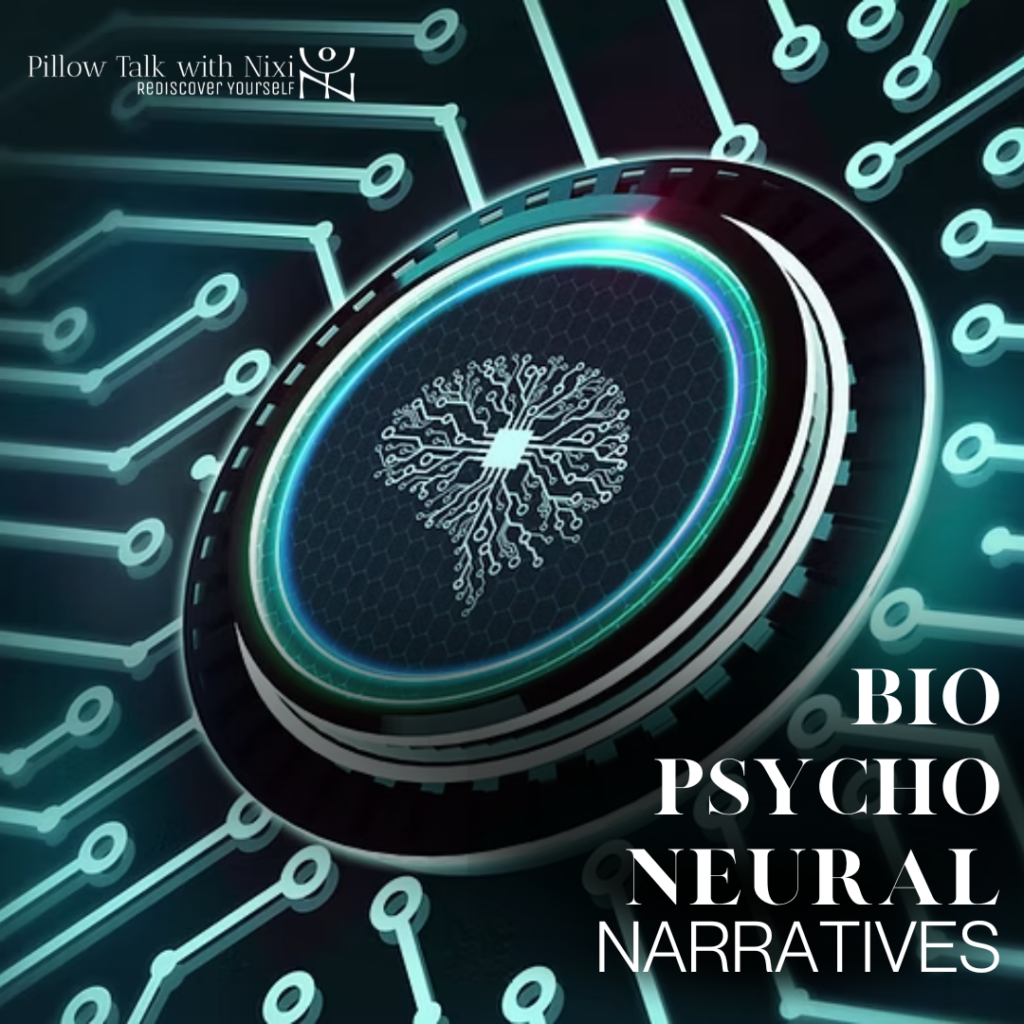
One of the Praxis employed in the PIRS Framework is BIOPSYCHONEURAL NARRATIVES.
It engages with the biological, psychological, and neurological dimensions of human experience by refusing to accept the dominant narratives of these fields at face value.
The neuroscience that most practitioners have been trained in focuses heavily on the white, Western, male, heterosexual, non-disabled body. Its categories, norms, and models of healthy development and disordered behavior have been derived from research populations that are not representative of humanity, yet they are applied universally. The Biopsychoneural Narratives pillar names this problem directly and addresses it systematically.
The courses in this pillar include a three-part deconstruction of widely held myths in popular neuroscience and psychology. They examine the science of pheromones, the true role of dopamine in the reward pathway, and the cultural limits of attachment theory. Attachment theory receives sustained critical attention. Developed in mid-twentieth-century Western clinical contexts, it has been exported globally as a universal description of healthy human development. This has profound consequences for how non-Western, collectivist, and non-nuclear family structures are pathologized in clinical settings. The PIRS Program provides the research base for a more culturally integrated, scientifically honest alternative.
The pillar also includes a rigorous exploration of the neuroscience of BDSM. This area has been systematically distorted by both clinical pathologization and popular sensationalism. By examining the neurobiological, psychological, and evolutionary underpinnings of pain and pleasure, the course challenges the conventional binary and provides practitioners with a framework for engaging with kink-positive communities grounded in actual science.
The StigmatoCortex course introduces a conceptual framework for understanding the neural circuits of stigma. It explores how disgust functions as a neurocognitive event that fuels dehumanization, how it is internalized by stigmatized communities, and how it operates as a mechanism of social control. This course draws on neuroimaging research, political theory, and the history of race and caste to produce an analysis that is simultaneously scientific and political.
Finally, the pillar includes a comprehensive investigation into epigenetics and the transgenerational transmission of trauma. The recognition that the wounds of colonialism, caste violence, and sexual trauma can be written into biology itself fundamentally changes the terms on which healing and justice must be understood. It demonstrates that individual therapeutic intervention is never sufficient on its own, and that the work of healing is inseparable from the work of structural change.

One of the Praxis employed in the PIRS Framework is FEMME ARCHITECTONICS.
It subjects to critical examination of how the category of “femme” has been constructed by specific historical forces serving specific political interests over certain geographies.
The dominant narratives when speaking about “femme”-ness tend to treat gender categories as natural and apolitical. The Femme Architectonics praxis refuses this naturalization entirely. It insists that gender is a historical and a political project as much as it is a personal identity. Understanding gender requires an in-depth analysis of historical processes, geographies, economics, sociocultural thoughts and political agendas through which the category of gender was produced.
The courses in this domain range from a decolonial investigation into conjugal family structures in eighteenth-century South Asia to a critical analysis of how belly dance was fabricated as an orientalist colonial fantasy. The belly dance course takes a practice that is routinely exoticized, sexualized, and stripped of its cultural context, and restores to it its full historical and political complexity.
The pillar also includes a course on asexuality titled I Desire to Be Desireless: When Ace Erotics Became the Norm. This course challenges the Eurocentric assumption of “compulsory sexuality” as the universal framework for human life. It takes seriously experiences and identities that mainstream clinical and academic frameworks have either ignored or pathologized, insisting that these experiences provide evidence that the norm itself is a construction.
Crucially, the Femme Architectonics pillar is dedicated to reclaiming silenced narratives. It actively seeks out and amplifies the stories that have been erased from the dominant feminist archive. This includes the contributions of trans women, sex workers, and feminists from the Global South who have been systematically excluded from mainstream feminist histories. Restoring these voices serves as a political act.
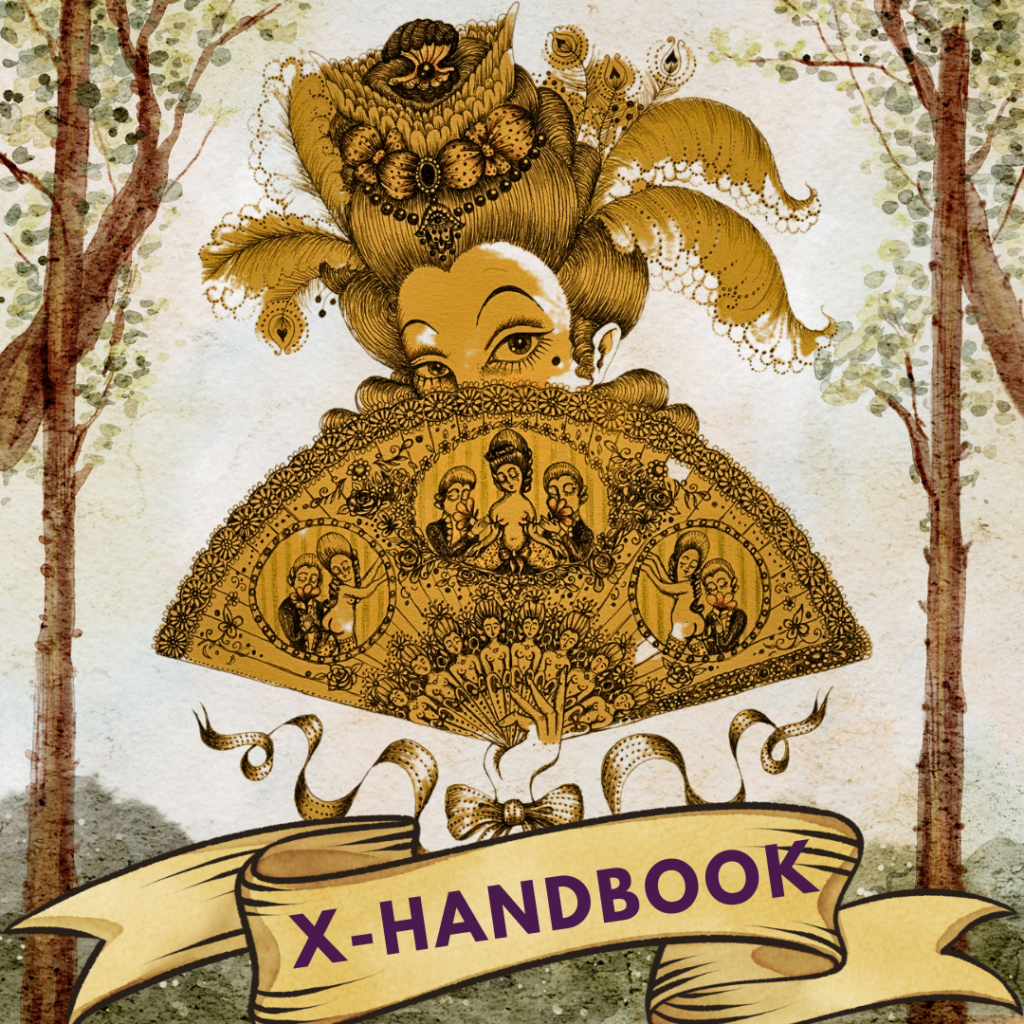
The third pillar of the PIRS Program provides a specialized examination of sex work, focusing on its politics, history, labor dimensions, and relationship to broader structures of power and resistance.
The X-Handbook begins from the position that sex workers are workers, their labor is labor, and the frameworks of bodily autonomy, labor rights, and anti-trafficking advocacy applied to other workers must be applied to them as well. The module provides a critical comparison of decriminalization and legalization models and their real-world impacts on bodily autonomy, safety, and labor rights. It delves into the complex nexus of freedom, trafficking, and ownership, challenging the simplistic narratives that have dominated both conservative and liberal feminist discourse. By centering the lived experiences of sex workers, including trans sex workers and sex workers from the Global South, it equips practitioners with the critical tools necessary to engage in informed and ethical advocacy.
The X-Handbook also undertakes a historical recovery project. It uncovers the erased contributions of sex workers to society and culture, re-examines foundational national narratives to reveal the pivotal roles of “founding mothers” in the sex trade, and undertakes a deep-dive into the history of sacred eroticism and desire. This historical lens directly challenges the stigma and dehumanization analyzed in the StigmatoCortex course.

The fourth pillar of the PIRS Program addresses the most urgent practical questions regarding how power operates on the body. It examines how colonial and modern states have managed populations, disciplined bodies, and constructed notions of the “normal” and the “other.”
The Biopolitical Cartography pillar draws on the theoretical frameworks of Foucauldian biopolitics and Achille Mbembe’s necropolitics. Mbembe defines necropolitics as the idea that sovereignty is increasingly defined by the power to let die, determining whose life is grievable and whose death is acceptable. These frameworks are used to understand the differential distribution of life and death that structures the world: who receives healthcare, whose sexuality is protected, and whose grief is recognized.
The module includes a course on Decolonizing Tantra, which provides an ethical engagement with Tantra as a living tradition that has endured spiritual colonization, systematic cultural attacks, and commodification. This course models a way of engaging with indigenous knowledge systems that takes seriously both the depth and the political complexity of these traditions, refusing the appropriation typical of the wellness industry.
The Biopolitical Cartography pillar also extends its analysis to the aesthetic and sensory realms. It examines the colonial control embedded in perceptions of taste, the politics of food and drink, and the historical narratives woven into hair and skin. This demonstrates the IIRS thesis that power operates at every scale of human experience, from the geopolitical to the intimate.