- FAUNASONICS: Music Therapy to address symptoms of PEM (ME/CFS)

- TEARS, THE SILENT SIGNAL: How Tears affect male aggression?
- PERFORMANCE PARADIGM: When Drag Culture becomes ritualized & celebrated
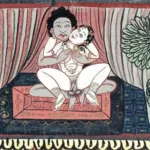
- EROTIC TEXTS OF INDIA: Rediscover Kamasutra and more.
- DOMESTICATING THE FERAL FEMME: Investigating the question, “What is a Woman?”

- INTERSECTIONAL RELATIONALITIES: Decolonizing attachments, intimacies and relationships

- CULTURAL IMPERIALISM & SPIRITUAL SCAVENGING: Deconstructing Whiteness & Eurocentrism in Sex Therapy, Counselling and Education
- SEX, AGE & ICOLONOCLASM: Cultural Discourses of Power, Taboo, and the Crone Figure

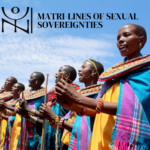
- MATRI-LINES OF SEXUAL SOVEREIGNTIES: An Exploration into Matri-archal/linial/local societies
- WITCHY ARCHETYPES (The Slut, Lesbian & Hag): Unraveling Societal Biases in Reproductive Choice

- CHROMVOLUTION: The Sociocultural Evolution of Color Perceptions

- PATHOLOGIZING DIFFERENCE: A Critique of Sexual Interest, Arousal & Desire Disorders
- CULTURAL SPA: Healing Inherited Wounds
- CRITIQUING ATTACHMENT THEORY: A Collectivist Society Perspective

- WHO AM I? Identity Questions that feel unsafe (a non-White collectivist perspective)

- EMOTIONAL BRAIN: Power, Pathology, and the Policing of Feelings
- NEUROBIOLOGY OF TRAUMA: Brain Architecture

- NEUROSCULPTING WORKSHOP: Brain Development from ages 0-8 (Foundations for coping with trauma)
- WIRING THE SOCIAL BRAIN: Neuroscience of Monogamous & Non-Monogamous Lifestyles
- POLICING SEXUAL AGENCY: Wives, Paramours, and Trans Women

- BELLY DANCE: History, Politics and Evolution of Sex Work Art Form

- I DESIRE TO BE DESIRELESS: When Ace Erotics became the Norm

- DECOLONIZING TANTRA: Reclaiming the Indigenous Knowledge
- TRANSGENERATIONAL THREADS: Epigenetic Insights into Trauma Legacies
- NEURONONSENSE & PSYCHOBABBLE: Pheromones, Dopamine & Attachment Theory
- NEUROSCIENCE OF PAIN & PLEASURE: An Exploration into BDSM
- NEUROSEX & BIOSPECTRUM: Cutting Edge Research in Gender, Sex and Reproduction
- STIGMATOCORTEX: Disgust, Discrimination & Dehumanization
In a world where academia often confines thought to its own rigid frameworks, we rise as a necessary, daring alternative. Here, curiosity isn’t constrained, and questioning isn’t just allowed, it’s essential. We are an insurgent intelligentsia, challenging conventional wisdom and exploring the world through the transformative lens of Gender & Sexuality.
At ISSI, we bring you an eclectic spectrum of courses, spanning across Neuroscience, Molecular Biology, Psychology, Gender and Sexuality Studies, Anthropology, History, Archaeology, Linguistics, Political Science, Dance Ethnography, Ethnomusicology, and Paleoclimateology, all designed to spark insight, dialogue, and revolutionary thinking.
Step in, and be part of a space where learning is bold, vibrant, and unapologetically necessary.
IIRS Modules are proudly led by the first Indian to earn the AASECT Certified Sex Educator (CSE) credential, Nishita Rao. This unprecedented achievement brings a world-class perspective to our courses, ensuring that our explorations of Gender & Sexuality, are grounded in both rigor and lived insight. Join us to learn, challenge, and rethink the world, guided by a pathbreaker in the field.
The following IIRS Modules provides us courses ranging from Neuroscience, Genetics, Anthropology, Psychology, Gender and Sexuality Studies, Linguistics, Political Science, Dance Ethnography, Ethnomusicology and Paleoclimateology.
MODULES
BioPsychoNeural Narratives
This module embarks on a revolutionary exploration of the human experience, situated at the dynamic intersection of biology, psychology, and neuroscience. It challenges the pseudoscientific clinical theories, replacing it with a more culturally integrated, scientifically backed research. The curriculum delves into the very architecture of our brain, revealing how 21st-century neuroscience is dismantling long-held assumptions about the self, emotion, and “normal human behavior”. By examining the brain as a culturally and experientially shaped organ, the module provides a new narrative for what it means to be human, one that is more fluid, interconnected, and profoundly adaptable.
The inquiry extends to the deepest roots of our social and psychological lives, investigating the neurobiological underpinnings of intimacy, attachment, and trauma. It critically examines dominant psychological paradigms, such as attachment theory, from cross-cultural and collectivist perspectives, exposing the ethnocentric biases that have often limited their application. The module further confronts the dark side of the human brain, exploring the neuroscience of disgust, prejudice, and dehumanization, and introducing a conceptual framework for understanding the neural circuits of stigma. By dissecting the brain-based cognitive biases that shape our perceptions and decisions, it fosters a more critical and self-aware engagement with the world.
Finally, the module is dedicated to the practical application of neuroscience for an informed mental health practice. It explores the intergenerational transmission of trauma through the lens of epigenetics, revealing how the wounds of the past can be written into our very biology and offering pathways for healing these inherited legacies. The module also provides a critical examination of the modern wellness industry, scrutinizing the journey of practices like mindfulness from ancient traditions to commodified clinical tools. Through interactive and experiential learning, participants are better informed when it comes to neural pathways, harnessing the principles of neuroplasticity to sculpt a more resilient, connected, and liberated existence.
Femme Architectonics
This module provides a critical framework for deconstructing the multifaceted and often-invisible structures that have historically defined and constrained femme. It embarks on a rigorous examination of how society, culture, and politics have architected the very concept of “femme.” The inquiry delves into the sociocultural evolution of perceptions, questioning the origins and impacts of gendered stereotypes and archetypes. It scrutinizes the institutions and norms that have policed queer bodies and autonomy, from the historical obsession with virginity to the modern-day reproductive and marital expectations that perpetuate patriarchal servitude. By dissecting these frameworks, the module aims to expose the foundational blueprints of gender inequality and empower a more nuanced understanding of the femme experience.
Furthermore, the module investigates the aesthetic and corporeal dimensions of femme identity, analyzing how fashion, makeup, and anthropometric standards have been wielded as tools of both oppression and empowerment. It explores the political landscape of beauty, tracing how brushstrokes and garments have been used to communicate dissent, conformity, and identity. The inquiry extends to the emotional and professional realms, dissecting the “feminization” of emotions and its impact on mental health, while also exposing the systemic barriers that create and maintain the global gender gap in the workforce. Through this comprehensive analysis, the module challenges participants to look beyond surface appearances and understand the deep-seated power dynamics that shape what it means to be a woman in the world.
Finally, this module is dedicated to reclaiming silenced narratives and challenging dominant historical accounts. It actively seeks out and amplifies the “partially pink” stories from marginalized feminist movements, including the often-overlooked contributions and perspectives of trans women, sex workers and feminists from the Global South. It confronts the erasure of women’s legacies, stolen spotlights, and the complex cultural discourses surrounding age, power, and the archetypal “crone” figure. By deconstructing stereotypes, including the sexualization and orientalism projected onto femme bodies, and by examining the intricate web of sexual politics in art, music, and literature, the module endeavors to dismantle the gender axis and build a more inclusive and accurate architecture of feminist thought and history.
X-Handbook
This module offers a specialized and unflinching examination of sex work and sex-positive perspectives, designed for those who wish to engage deeply with these often-marginalized topics. It provides a rigorous analysis of the political and legal landscapes that govern sex work, critically comparing decriminalization and legalization models and their real-world impacts on bodily autonomy, safety, and labor rights. The curriculum delves into the complex nexus of freedom, trafficking, and ownership, challenging simplistic narratives and fostering a nuanced understanding of the economic and social forces at play. By centering the lived experiences of sex workers, the module aims to equip participants with the critical tools necessary to engage in informed and ethical advocacy.
The X-Handbook further endeavors to correct the historical record by uncovering the erased and often-unacknowledged contributions of sex workers to society and culture. It re-examines foundational national narratives to reveal the pivotal roles of “founding mothers” in the sex trade and undertakes a deep-dive into the history of sacred eroticism and desire, re-contextualizing the legacies of courtesans. This historical lens is complemented by a critical deconstruction of the pervasive stereotypes, orientalism, and sexualization that continue to shape public perception. The module also explores the rich artistic and cultural production within sex worker communities, analyzing how dance, music, and literature have been used to choreograph identity, resist erasure, and articulate a unique sexual politics.
Finally, this module directly confronts the internal schisms within feminist movements, particularly the silencing of trans sex workers and Global South sex workers. It creates a space to engage with these “partially pink” and often-unheard tales, advocating for a more inclusive and intersectional feminist praxis. The inquiry extends to the corporeal and aesthetic politics of the trade, examining how fashion, makeup, and the performance of beauty intersect with labor and identity. By addressing the overlooked wellness and reproductive justice issues within the community and ultimately questioning the very construction of a gendered society, the X-Handbook works to dismantle the axis of stigma and build a framework grounded in liberation, dignity, and self-determination.
Biopolitical Cartography
This module maps the complex and often violent intersections of power, politics, and the human body across geographical and historical landscapes. It provides a critical lens through which to analyze how modern nation-states and colonial powers have historically managed populations, disciplined bodies, and constructed notions of the ‘normal’ and the ‘other.’ The inquiry delves into the very origins of capitalism and colonization, tracing their biopolitical logics from historical case studies to contemporary geopolitics. By examining the mechanisms of borders, the marginalization of migratory peoples, and the scientific construction of social norms, the module seeks to expose the cartographies of power that are inscribed onto both land and flesh.
The curriculum further investigates the legacy of colonialism on cultural identity and corporeal experience. It undertakes a decolonizing critique of knowledge systems, from spiritual practices to scientific theories, challenging the Eurocentric biases that have long dominated academic discourse. This includes a rigorous exploration of whiteness studies, which turns the ethnographic gaze back onto the structures of power and privilege that have shaped the modern world. Through a critical examination of how post-colonial identities are renamed, reclaimed, and rebuilt, the module interrogates the ways in which the colonized body has been both literally and metaphorically consumed, controlled, and commodified.
Finally, the Biopolitical Cartography module extends its analysis to the aesthetic and sensory realms, revealing how politics permeates even the most intimate aspects of our lives. It scrutinizes the colonial control embedded in our perceptions of taste, the politics of food and drink, and the historical narratives woven into our hair and skin. By dissecting the gendered and racialized dimensions of fashion, makeup, and beauty standards, the module uncovers the subtle yet pervasive ways in which biopower shapes our daily existence. This comprehensive mapping of the biopolitical landscape challenges participants to recognize and critique the systems of control that govern our bodies, our relationships, and our very sense of self.