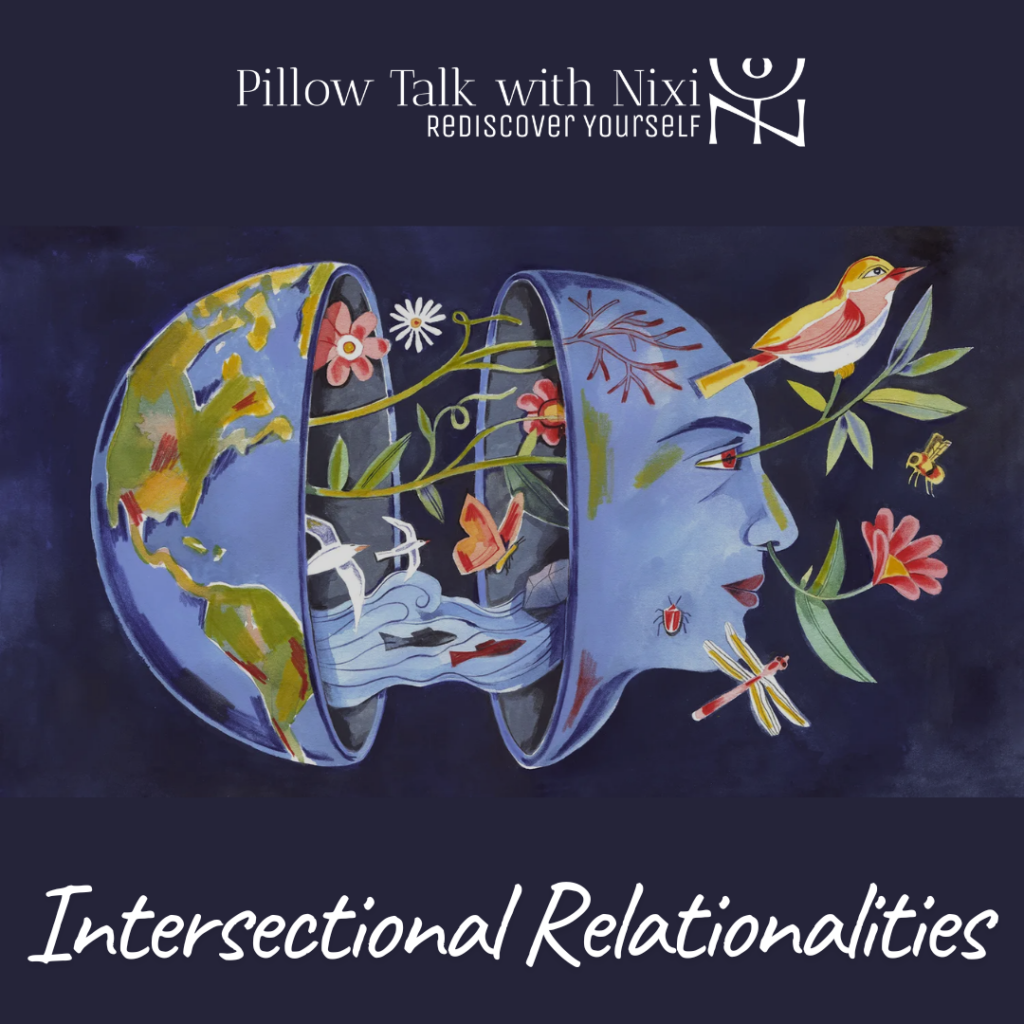
BIOPSYCHONEURAL NARRATIVES | BIOPOLITICAL CARTOGRAPHY | FEMME ARCHITECTONICS | X-HANDBOOK
[5 CE CREDIT HOURS]
AASECT CATEGORY
CKAs:
EDUCATOR: Nishita Rao, CSE
WEBINAR [Synchronous/Virtual]
Distance Learning – Recordings available on The Elsewheres
DESCRIPTION
This session explores the concept of “Intersectional Relationalities,” challenging the Western, individualistic, and often capitalist-driven frameworks of identity and relationships. By decentering W.E.I.R.D. (Western, Educated, Industrialized, Rich, and Democratic) perspectives, the presentation examines how diverse communities across the globe understand human connection, mutualism, and identity. The course draws upon a rich tapestry of cultural practices, historical texts, and indigenous knowledge systems.
It highlights the mutualistic relationship in the Hadza tribe of Tanzania and the Yao people of Mozambique. It examines the deep interspecies bonds formed by the Matses tribe in the Amazonian forests of Peru. The lesson also explores alternative family and social structures, such as the self-combed women (Zishunü) of the Gu Po Wu community in Guangdong, China, and the complex bride payment (Roora/Rusambo) traditions of the Shona culture in Zimbabwe. Furthermore, it investigates unique marital and gender expressions, including the groom abduction (Chawarisikka) practices of the Garo tribe (specifically the Abeng and Matabengs sub-groups) in Meghalaya, India, the male beauty pageants (Gerewol) of the Wodaabe tribe (part of the Fulani ethnic group) in Niger and Chad, and the recognized third gender community of Hijras/Kinnars in India.
The lesson also touches upon the practice of Teknonymy among the Balinese people of Bali and the Garo people of Meghalaya. It delves into historical Indian relationship dynamics through the lens of courtesan culture in Tamil Nadu, the five Tinais (landscapes) of Tamil Sangam literature, and the collaborative values embedded in the traditional game Āḍu Puli Āṭṭam played by Dravidian cultures. Finally, it references ancient Sumerian love poetry (Inanna and Dumuzi) and the traditional dances of the Ouled Naïl women from the Amazigh (Berber) tribes in the Atlas Mountains of Algeria. Through these diverse examples, the lesson critiques the biopolitics of regulating sexual economies and pronatalism, advocating for a broader, more inclusive understanding of intimacy and identity.
LEARNING OBJECTIVES
- By the end of this presentation, participants will be able to understand the concept of intersectional relationalities and critique the limitations of W.E.I.R.D. (Western, Educated, Industrialized, Rich, and Democratic) frameworks in defining human attraction, intimacy and identity.
- By the end of this presentation, participants will be able to identify and describe various global non-White cultural practices related to marriage, gender, and community structure (e.g., Shona Roora, Wodaabe Gerewol, Garo Chawarisikka, Chinese Zishunü).
- By the end of this presentation, participants will be able to examine how political ideologies, such as pronatalism and capitalism, regulate sexual economies and influence societal norms regarding marriage and reproduction.
- By the end of this presentation, participants will be able to recognize the significance of mutualism and deep connections with nature, as demonstrated by the Hadza, Yao, and Matses tribes.
- By the end of this presentation, participants will be able to reflect on the multifaceted nature of personal identity, moving beyond simple labels to encompass land, language, food, art, and community service.
AVAILABLE ON
ErosCoaching AASECT CE · Standard Access Access Now The Elsewheres AASECT CE · Collective Access Access Now Forbidden Tickets Community Access Access Now Eventbrite Open Access Access Now Learn More about AASECT.
Access Key
Standard Access: Full course access with AASECT Continuing Education credits. Ideal for licensed clinicians and certified professionals fulfilling CE requirements (First-come, first-served).
Collective Access: Full course access with AASECT Continuing Education credits, offered at a lower price point to support decolonial participation across professional communities (First-come, first-served).
Community Access: Full course access without AASECT CE credits, designed for BIPOC, queer, kink+, and sex-positive community members engaging outside of a clinical or certification context.
Open Access: Registration open to all, including international students. No AASECT CE credits issued. Suitable for anyone curious about the subject matter regardless of professional background.
EDUCATOR BIO
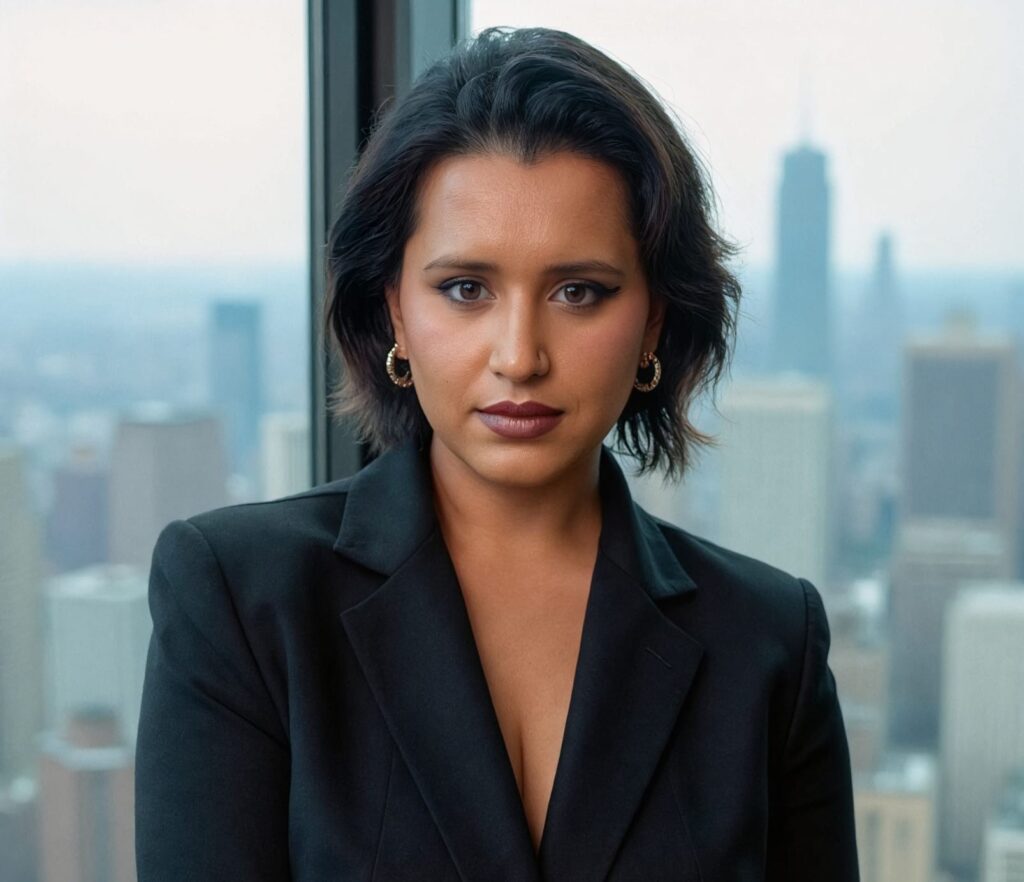
Nishita Rao (she/her) holds an MS in Neuroscience with a focus on Behavioral Neuroendocrinology and a BE in Biotechnology, specializing in Brain-Computer Interfaces & Phytochemistry. Her courses span across disciplines such as Sexual Sciences, Neuroscience, Anthropology, Molecular Biology, Behavioral Sciences, Political Science, Linguistics, Dance Ethnography, Ethnomusicology, and Paleoclimateology. She is also the First Indian AASECT Certified Sex Educator (CSE).