FEMME ARCHITECTONICS | X-HANDBOOK | BIOPOLITICAL CARTOGRAPHY |
[4 CE CREDIT HOURS]
AASECT CATEGORY
CKAs: C, D, F, P
EDUCATOR: Nishita Rao, CSE
WEBINAR [Synchronous/Virtual]
Distance Learning – Recordings available on The Elsewheres
DESCRIPTION
What was marriage like in 18th century South Asia? Was it built on sex, attraction and intimacy? What did non-conjugal intimacies look like? What was the society’s view on queer desires and bodies?
Join me as I navigate through 18th century conjugal family, where wives, widows and paramours lived together under the same roof. This presentation shall also investigate the impact of society’s adoption of colonial morals on the perception queer desires and non-monogamous relationships.
We will also attempt to decolonize dominant assumptions about monogamy by examining how it came to be framed as the social ideal. Rather than a universal norm, its rise is closely tied to the political needs of emerging nation-states. Monogamous marriage provided a convenient system for regulating sexuality, managing inheritance and property, and organizing populations. In this way, it has historically functioned as a tool through which states police and control bodies.
LEARNING OBJECTIVES
- By the end of the class, participants will be able to contextualize conjugal family structures in 18th-century South Asia, including the co-existence of wives, widows, and paramours within extended domestic spaces.
- By the end of the class, participants will be able to interrogate the construction of monogamy as a social ideal through the lenses of decolonial theory and sexual politics.
- By the end of the class, participants will be able to analyze how colonial morality and sexual norms reshaped local understandings of gender variance, trans-bodies, and sexuality.
- By the end of the class, participants will be able to evaluate how marriage regimes function as mechanisms for regulating sexuality, disciplining bodies, and organizing inheritance, property, and population within nation-state formation.
AVAILABLE ON
ErosCoaching AASECT CE · Standard Access Access Now The Elsewheres AASECT CE · Collective Access Access Now Forbidden Tickets Community Access Access Now Eventbrite Open Access Access Now Learn More about AASECT.
Access Key
Standard Access: Full course access with AASECT Continuing Education credits. Ideal for licensed clinicians and certified professionals fulfilling CE requirements (First-come, first-served).
Collective Access: Full course access with AASECT Continuing Education credits, offered at a lower price point to support decolonial participation across professional communities (First-come, first-served).
Community Access: Full course access without AASECT CE credits, designed for BIPOC, queer, kink+, and sex-positive community members engaging outside of a clinical or certification context.
Open Access: Registration open to all, including international students. No AASECT CE credits
EDUCATOR BIO
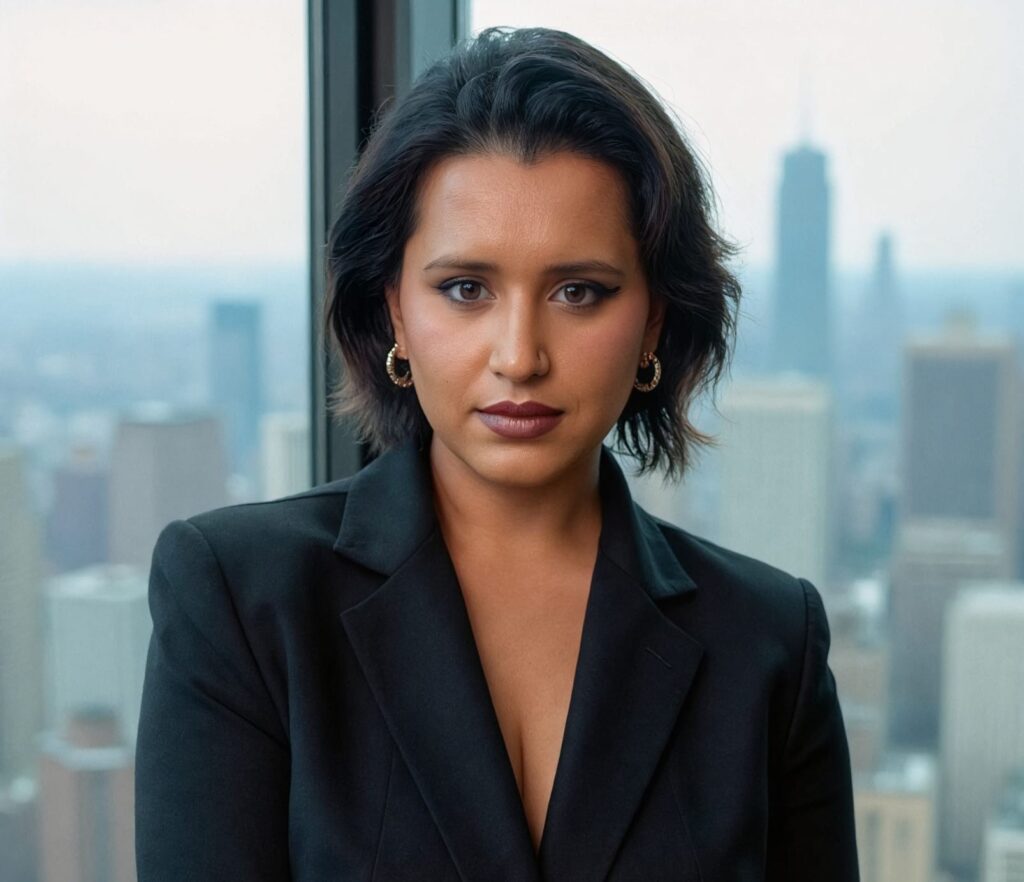
Nishita Rao (she/her) holds an MS in Neuroscience with a focus on Behavioral Neuroendocrinology and a BE in Biotechnology, specializing in Brain-Computer Interfaces & Phytochemistry. Her courses span across disciplines such as Sexual Sciences, Neuroscience, Anthropology, Molecular Biology, Behavioral Sciences, Political Science, Linguistics, Dance Ethnography, Ethnomusicology, and Paleoclimateology. She is also the First Indian AASECT Certified Sex Educator (CSE). She is also a Reiki Grandmaster.