BIOPSYCHONEURAL NARRATIVES | THINKTANK: DECONSTRUCT. ANALYZE. REDEFINE.
[2 CE CREDIT HOURS]
AASECT CATEGORY
CKAs: P, Q
DOI:
EDUCATOR: Nishita Rao, CSE
WEBINAR [Synchronous/Virtual]
Distance Learning – Recordings available on The Elsewheres
DESCRIPTION
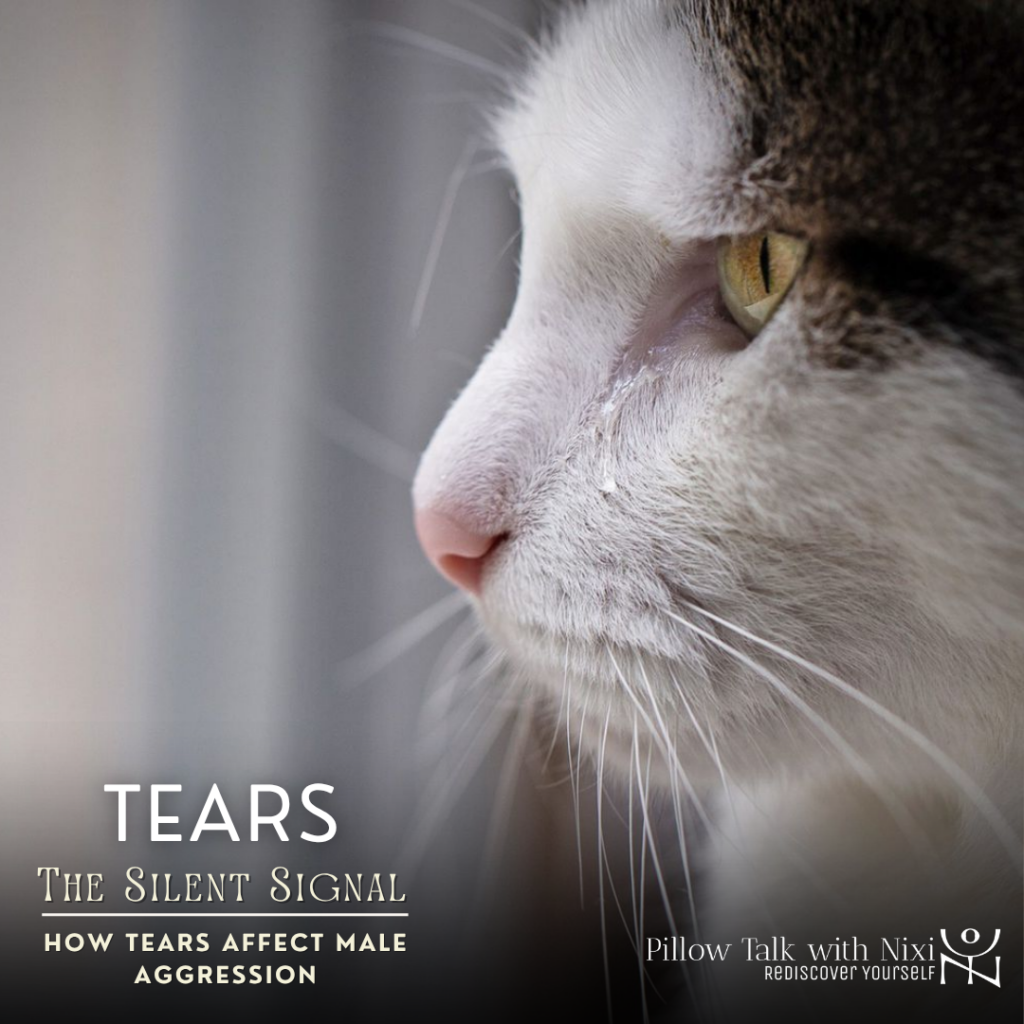
The study of human chemosignaling provides a fascinating window into the biological underpinnings of social behavior. While extensive research has documented how chemical signals in rodent tears modulate reproductive and aggressive behaviors, the role of similar mechanisms in humans has remained largely unexplored. This journal club session will examine a recent study by Agron and colleagues investigating the behavioral and neural effects of human emotional tears on male aggression.
The authors hypothesized that human tears contain a chemical signal capable of reducing aggression, mirroring findings in animal models. Using a standardized behavioral task known as the point subtraction aggression paradigm, the researchers measured aggressive responses in men after exposure to either emotional tears or a saline control. They found that sniffing perceptually odorless emotional tears resulted in a 43.7% reduction in aggressive behavior. To understand the mechanisms driving this effect, the study employed in vitro assays to identify specific human olfactory receptors activated by tears. Furthermore, functional magnetic resonance imaging revealed that exposure to tears decreased activity in brain regions associated with reactive aggression, such as the anterior insula and prefrontal cortex, while increasing functional connectivity between olfactory and aggression networks.
This session is designed to encourage critical thinking skills and better equip practitioners to evaluate emerging biological research. We will dissect the study’s methodology, including the use of behavioral paradigms and neuroimaging, to assess the validity of its findings. By critically analyzing this research, attendees will explore how unconscious chemical signals might influence human interaction and emotional regulation. We will also discuss the broader implications of these findings for clinical practice, considering how a deeper understanding of the biological mediators of aggression could inform therapeutic interventions and diagnostic approaches in psychology and sexology.
LEARNING OBJECTIVES
- At the end of the session, attendees will be able to critically analyze to evaluate its methodology, design and findings to determine its validity.
- At the end of the session, attendees will be able to contextualize academic journal articles to broader implications, such as clinical practice, diagnostic tools, or potential therapeutic interventions.
AVAILABLE ON
ErosCoaching AASECT CE · Standard Access Access Now The Elsewheres AASECT CE · Collective Access Access Now Forbidden Tickets Community Access Access Now Eventbrite Open Access Access Now Learn More about AASECT.
Access Key
Standard Access: Full course access with AASECT Continuing Education credits. Ideal for licensed clinicians and certified professionals fulfilling CE requirements (First-come, first-served).
Collective Access: Full course access with AASECT Continuing Education credits, offered at a lower price point to support decolonial participation across professional communities (First-come, first-served).
Community Access: Full course access without AASECT CE credits, designed for BIPOC, queer, kink+, and sex-positive community members engaging outside of a clinical or certification context.
Open Access: Registration open to all, including international students. No AASECT CE credits issued. Suitable for anyone curious about the subject matter regardless of professional background.
OPEN EDUCATION RESOURCE
Rao, N. (2024, October 8). Tears, the Silent Signal: How tears affect male aggression?. N. Rao Publications. https://doi.org/10.5281/zenodo.19232588
Resource type: Lesson
Publisher: N. Rao Publications
Hosting institution: Institute for Intersectional Relational Studies
Copyright: Copyright © 2024 N. Rao Publications
Agron, S., et. al. (2023). A chemical signal in human female tears lowers aggression in males. PLoS biology, 21(12), e3002442. https://doi.org/10.1371/journal.pbio.3002442
Resource type: Research Report
Publisher: PLOS Biology
Copyright: Copyright © 2023 Agron et al.
EDUCATOR BIO

Nishita Rao (she/her) holds an MS in Neuroscience with a focus on Behavioral Neuroendocrinology and a BE in Biotechnology, specializing in Brain-Computer Interfaces & Phytochemistry. Her courses span across disciplines such as Sexual Sciences, Neuroscience, Anthropology, Molecular Biology, Behavioral Sciences, Political Science, Linguistics, Dance Ethnography, Ethnomusicology, and Paleoclimateology. She is also the First Indian AASECT Certified Sex Educator (CSE).