
FEMME ARCHITECTONICS | X-HANDBOOK | BIOPOLITICAL CARTOGRAPHY |
[3 CE CREDIT HOURS]
AASECT CATEGORY
CKAs: D, F, I
EDUCATOR: Nishita Rao, CSE
WEBINAR [Synchronous/Virtual]
Distance Learning – Recordings available on The Elsewheres
DESCRIPTION
Compulsory sexuality (Chasin 2013; Emens 2013), sex-normative culture (Cerankowski and Milks 2010), sexual normativity ((Hinderliter 2009); (Chasin 2011, 2013), sexusociety (Przybylo 2011), and the sexual assumption (Carrigan 2011), all the terms attempt “to identify several aspects of the contemporary sexual landscape, including the assumption that all people are sexual; the norms and practices that
compel people to experience themselves as desiring subjects, take up sexual identities, and engage in sexual activity; and the norms and practices that marginalize various forms of non-sexuality (including a lack of interest in sex, a lack of sexual activity, or a disidentification with sexuality).”
But what if a society was not built on the importance of sexuality and sex amongst humans, but on communal identities of land, money, food, spirituality, culture and arts? What if the society idealized Non-sexuality? What if these Ace Erotics indulged in, became the new Normal that sparked a revolution in Theological Thought and also gave birth to Buddhism?
This study challenges the Eurocentric and American-centric assumption that “Compulsory Sexuality” is the universal framework through which society dictates human lives. Drawing on critical analysis of South Asian sex-gender-caste politics, performance arts and cultural evolution of spiritual & religious practices, this research proposes an alternative framework — Non-Sexuality: the new normal, where existing with a mind without desires (desirelessness) was idealized, and the expression of desire is socially and religiously stigmatized for all genders and sexualities.
LEARNING OBJECTIVES
- By the end of the class, participants will be able to explain the concept of compulsory non-sexuality function as a mechanism of social control across different groups in South Asian contexts
- By the end of the class, participants will be able to understand the CNS implications on gender and queer politics in marginalized populations across the Global South
- By the end of the class, participants will be able to critically assess impact of colonialization on the post-colonial state’s understanding of an idealized desire framework
AVAILABLE ON
ErosCoaching AASECT CE · Standard Access Access Now The Elsewheres AASECT CE · Collective Access Access Now Forbidden Tickets Community Access Access Now Eventbrite Open Access Access Now Learn More about AASECT.
Access Key
Standard Access: Full course access with AASECT Continuing Education credits. Ideal for licensed clinicians and certified professionals fulfilling CE requirements (First-come, first-served).
Collective Access: Full course access with AASECT Continuing Education credits, offered at a lower price point to support decolonial participation across professional communities (First-come, first-served).
Community Access: Full course access without AASECT CE credits, designed for BIPOC, queer, kink+, and sex-positive community members engaging outside of a clinical or certification context.
Open Access: Registration open to all, including international students. No AASECT CE credits
EDUCATOR BIO
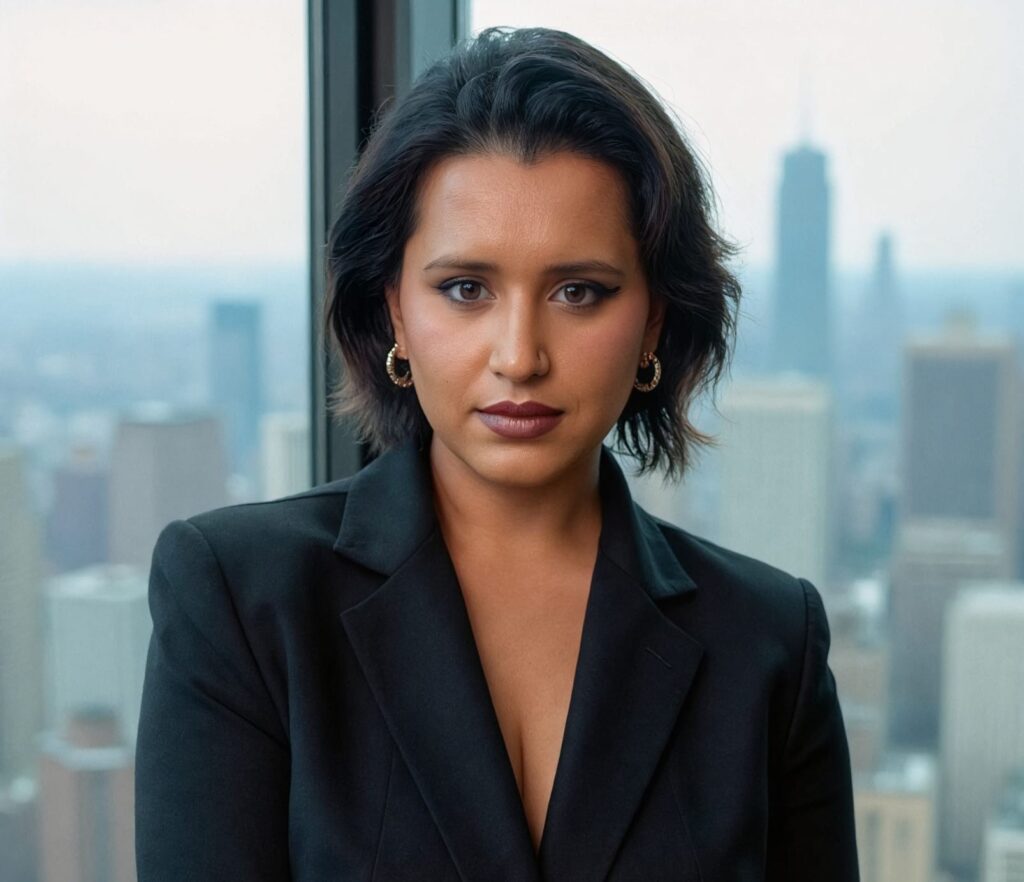
Nishita Rao (she/her) holds an MS in Neuroscience with a focus on Behavioral Neuroendocrinology and a BE in Biotechnology, specializing in Brain-Computer Interfaces & Phytochemistry. Her courses span across disciplines such as Sexual Sciences, Neuroscience, Anthropology, Molecular Biology, Behavioral Sciences, Political Science, Linguistics, Dance Ethnography, Ethnomusicology, and Paleoclimateology. She is also the First Indian AASECT Certified Sex Educator (CSE). She is also a Reiki Grandmaster.